
The Talmud, a cornerstone of Jewish law, ethics, and tradition compiled between the 3rd and 6th centuries CE, contains intriguing references to Jesus of Nazareth that diverge sharply from the familiar Christian narrative. Drawing from the Babylonian Talmud these passages portray Jesus as a sorcerer, heretic, and deceiver whose actions led to his execution and divine retribution. While these accounts vary in their timelines and details, they offer a unique perspective on how early rabbinic authorities viewed Jesus and his followers amidst the growing divide between Judaism and Christianity. This article explores these Talmudic depictions, presenting them as they appear in the texts, and sheds light on a lesser-known facet of religious history. (Sources included at bottom of article.)
The Trial and Execution of Jesus
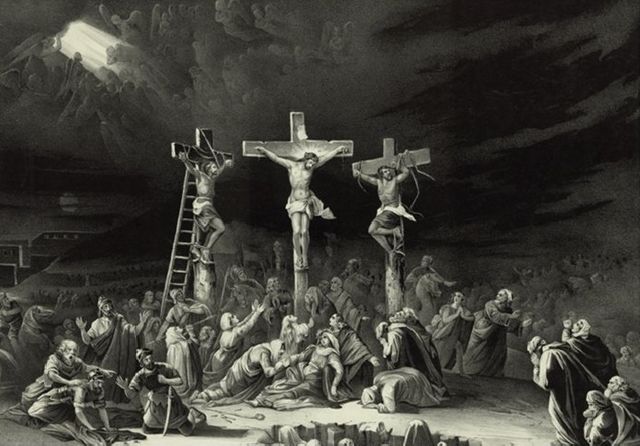
In Sanhedrin 43a of the Babylonian Talmud, Jesus’ demise is recounted with a blend of legal formality and stark consequence. On the eve of Passover, he was hanged following a 40-day period during which a herald announced his impending execution by stoning. His crimes? Practicing sorcery, enticing Israel to apostasy, and leading the Jewish people astray. Despite the public call for defenders, none stepped forward, sealing his fate. The text also notes that five of his disciples—Mattai, Nakai, Netzer, Buni, and Todah—were executed alongside him, their deaths justified through scriptural citations.
This narrative aligns with the Gospel accounts in its Passover timing but diverges in its details. The 40-day herald and the initial intent to stone—followed by hanging—contrast with the swift trial and Roman crucifixion depicted in the New Testament. The Talmud frames Jesus’ death as a deliberate act of Jewish justice, emphasizing his role as a dangerous transgressor.
Posthumous Punishment in the Afterlife
The Talmud doesn’t stop at Jesus’ death. In Gittin 56b-57a, Onkelos, a convert to Judaism, summons Jesus’ spirit in a supernatural inquiry into the fates of the damned. Jesus confesses to enduring a gruesome punishment: boiling in excrement in the afterlife. He attributes this torment to his sins against Israel and his mockery of the sages, a fate that starkly opposes Christian claims of resurrection and ascension. This vivid depiction reinforces the Talmud’s view of Jesus as a figure whose transgressions merited eternal condemnation.

Jesus as a Wayward Disciple
A compelling tale in Sanhedrin 107b and Sotah 47a casts Jesus as a disciple of Rabbi Yehoshua ben Perachyah, a prominent sage during the reign of King Yannai (103–76 BCE). The story unfolds during a journey when Rabbi Yehoshua commented on an innkeeper’s appearance. Jesus, misinterpreting the remark as lustful, clashed with his teacher. Rebuked and excommunicated, Jesus turned to idolatry and began leading Jews astray. Though Rabbi Yehoshua later sought reconciliation, Jesus persisted in his rebellion, laying the groundwork for a deviant movement.
This account places Jesus over a century before his historical life (circa 4 BCE–30 CE), a chronological anomaly that underscores the Talmud’s focus on moral lessons over historical precision. Here, Jesus emerges as a cautionary figure—a talented student whose pride and misjudgment led to apostasy and corruption.

Interactions with Jesus’ Followers
The legacy of Jesus extends to his followers, who face similar scrutiny. In Avodah Zarah 16b-17a, Rabbi Eliezer recounts a troubling encounter with Jacob of Sikhnin, a disciple of Jesus, referred to here as “Yeshu ben Pandera.” Jacob shares a saying attributed to Jesus, suggesting that a prostitute’s earnings be used to build a toilet for the High Priest—a biting mockery of Jewish law. Rabbi Eliezer, amused by the quip, later links this moment to his own arrest for heresy, highlighting the perceived danger of Jesus’ teachings.
Another incident, from Tosefta Chullin 2:22-24 around 200 CE, describes Jacob, a follower of “Yeshu ben Pandera,” attempting to heal Rabbi Eleazar ben Damma from a snakebite using Jesus’ name. Before the healing takes effect, Eleazar dies, and the text condemns the act as heretical. These stories portray Jesus’ followers as perpetuators of his legacy, wielding his name in ways deemed invalid and subversive by rabbinic authorities.
The Question of Identity: Names and Epithets
Jesus appears under various names in the Talmud, each carrying potential significance. He is called “Yeshu,” “Yeshu ben Pandera,” and linked to “Ben Stada.” In Shabbat 104b, “Ben Stada,” born to Miriam (a hairdresser), is executed in Lydda for sorcery, with debates placing this event in Rabbi Akiva’s time (early 2nd century CE) or earlier. The location (Lydda, not Jerusalem) and timing differ from the Gospel narrative, yet the sorcery charge echoes other accusations against Jesus.
The name “ben Pandera” may nod to rumors of illegitimacy, possibly tied to a Roman soldier named Pandera, while “Ben Stada” could reflect a separate tradition or a conflation of figures. These shifting identities amplify the Talmud’s critical portrayal, casting Jesus as an outsider marked by scandal and deception.

A Stark Contrast to Christian Narratives
The Talmud’s depiction of Jesus is unrelentingly negative: a sorcerer and heretic executed for leading Jews astray, punished eternally, and followed by disciples who perpetuate his errors. These accounts vary in their details—placing Jesus in the 2nd century BCE with Rabbi Yehoshua, or in Lydda post-70 CE, with execution methods ranging from stoning to hanging—yet they consistently affirm his role as a threat to Jewish faith and practice.
This portrayal stands in sharp contrast to the Christian narrative of Jesus as a divine savior crucified in Jerusalem around 30 CE. The Talmud’s inconsistencies in time and place reflect its emphasis on theological critique over historical accuracy. Compiled amidst the rise of Christianity, these passages capture the early friction between Rabbinic Judaism and the emerging faith, offering a window into a pivotal moment of religious divergence.
Far from the revered figure of the Gospels, the Talmud’s Jesus is a cautionary tale—a man whose actions brought judgment upon himself and his followers. A man who is boiling in excrement in the afterlife according to the Talmud These ancient texts, rich with debate and tradition, remind us of the differences of belief and identity that continues to shape the histories of Judaism and Christianity.
Sources:
 usafirstnews.org
Leave a comment