
HAIFA, Israel — In the shadow of the Haifa Military Cemetery, where rows of uniform headstones honor Israel’s fallen heroes, a grieving mother stands, humiliated. Yulia Bogdanovskyi clutches a photograph of her son, Staff Sergeant David Bogdanovskyi, a 19-year-old Christian soldier who died for Israel in December 2023 during combat in Khan Younis, Gaza. She placed a simple cross on his grave—a symbol of his cherished faith—only to face an ultimatum from Israel’s Defense Ministry: remove it or see her son’s remains exhumed and removed from the cemetery entirely.

This is not a tale of compromise or mutual respect. It’s a story of cold bureaucracy, alleged religious intolerance, and a nation that appears to have forgotten gratitude. David, who immigrated from Ukraine in 2014 with his family, enlisted in the Israel Defense Forces (IDF) to serve a country that embraced him through his father’s Jewish heritage. He fought and fell alongside Jewish comrades in the Combat Engineering Corps, sacrificing his life for a Jewish state. Yet, in death, Israel has allegedly rejected his identity, enforcing a regulation that bans religious symbols on military graves—purportedly for “uniformity”—while dishonoring the memory of a Christian soldier.
The Bogdanovskyi family’s struggle began shortly after David’s burial, when they adorned his headstone with a cross as a quiet tribute to his faith. The gesture sparked outrage among some Jewish families with loved ones buried nearby, who argued that the Christian symbol offended their sensibilities and disrupted their prayers. The IDF Chief Rabbi reportedly deemed the cross a violation of the cemetery’s sanctity. The Defense Ministry soon intervened, citing a strict policy: no religious markers permitted. During a memorial ceremony for other fallen soldiers, Yulia arrived to find her son’s headstone draped in a black cloth—a stark erasure of his identity. “I don’t have words to describe the humiliation I felt,” she told reporters, her voice breaking with grief.
Israel’s supporters might claim this policy maintains order in a diverse military cemetery, where uniformity honors all equally. But the Bogdanovskyi family perceives a harsher reality: a state so anchored in its Jewish identity that it allegedly cannot abide another faith’s presence, even from a soldier who died for it. They assert that other graves in Haifa bear religious markers—a claim the Ministry denies without substantiation—prompting questions of inconsistent enforcement. Is this truly about regulation, or a subtle exclusion of Christian expression in a sacred space?
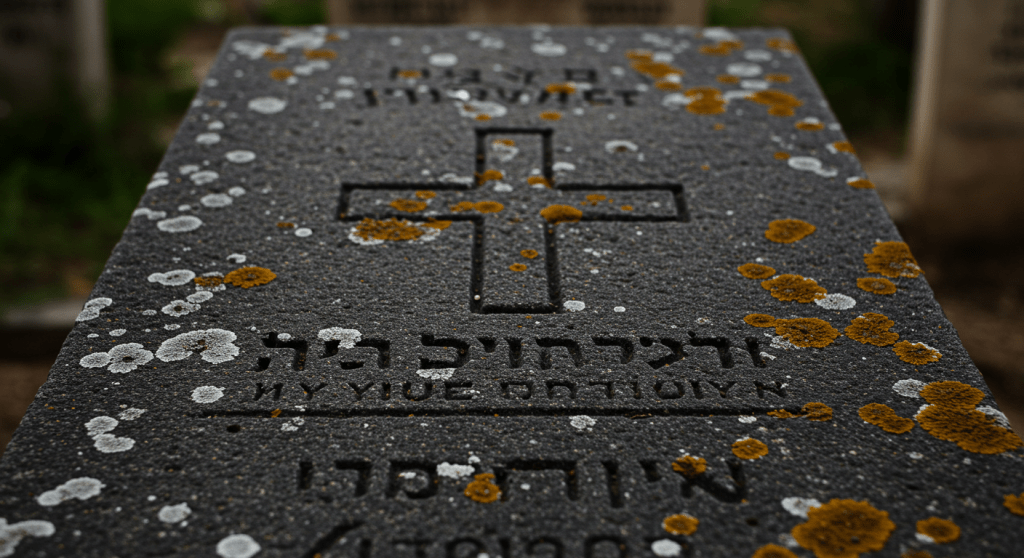
The Ministry’s response has been rigid and unyielding. Instead of pursuing a compromise, it demanded the cross be removed by early November 2024, threatening to exhume David’s body and rebury it outside the military cemetery he earned a place in. This is not dialogue; it’s coercion. Still mourning their loss, the family now risks losing the dignity of their son’s resting place. Knesset member Meir Cohen labeled the black cloth “a dark stain on Israeli society,” but the issue runs deeper—a systemic failure to honor a soldier’s sacrifice.
For American conservatives, this resonates deeply. Israel, a nation we’ve long championed as a democratic stronghold, is revealing a troubling side: one reminiscent of the secular overreach we criticize at home, where crosses are banned from public spaces in the name of “neutrality.” Yet neutrality should not equate to erasure. David didn’t die for a sanitized Israel—he died for a nation that professes to uphold freedom, including the freedom of belief.
The contradiction is stark. Since 2013, non-Jewish soldiers like David have been eligible for burial in military cemeteries, reflecting the IDF’s growing diversity fueled by immigrants from the former Soviet Union and beyond. But what value is inclusion if it silences faith? In the United States, the National Cemetery Administration permits emblems of belief—crosses, Stars of David, even Wiccan pentacles—on military graves, acknowledging that honoring the fallen means respecting their identities. Israel, however, appears determined to mold individuality into a uniform, state-sanctioned narrative, shaped by the most vocal critics and stringent rabbinical views.
Cultural tensions underpin this conflict. For some Jews, the cross evokes a history of persecution—a valid perspective, yet one that shouldn’t supersede a grieving Christian family’s rights. David’s service was not conditional on abandoning his beliefs; it was a testament to his loyalty, now met with rejection. Haifa’s deputy mayor, Yossi Shalom, declared, “Respect for the fallen must transcend faith.” Israel’s actions, however, suggest a narrower tolerance, casting a shadow over its democratic ideals.
As of late 2024, no resolution has emerged. The Defense Ministry insists it is “working with the family,” yet the deadline looms, threatening to uproot David’s grave. The Bogdanovskyi family’s cries reverberate across a nation celebrated for resilience but faltering in empathy. For conservatives observing from afar, this is more than a distant dispute—it’s a cautionary tale. If Israel, a nation we esteem, can so readily dishonor a Christian soldier’s memory, it underscores the vulnerability of religious liberty against state authority.
David Bogdanovskyi gave his life for Israel. In return, Israel is stripping away his cross—and with it, a fragment of his soul. This is not the Israel we uphold. It’s a diminished shadow, less worthy of the sacrifices it demands.
 usafirstnews.org